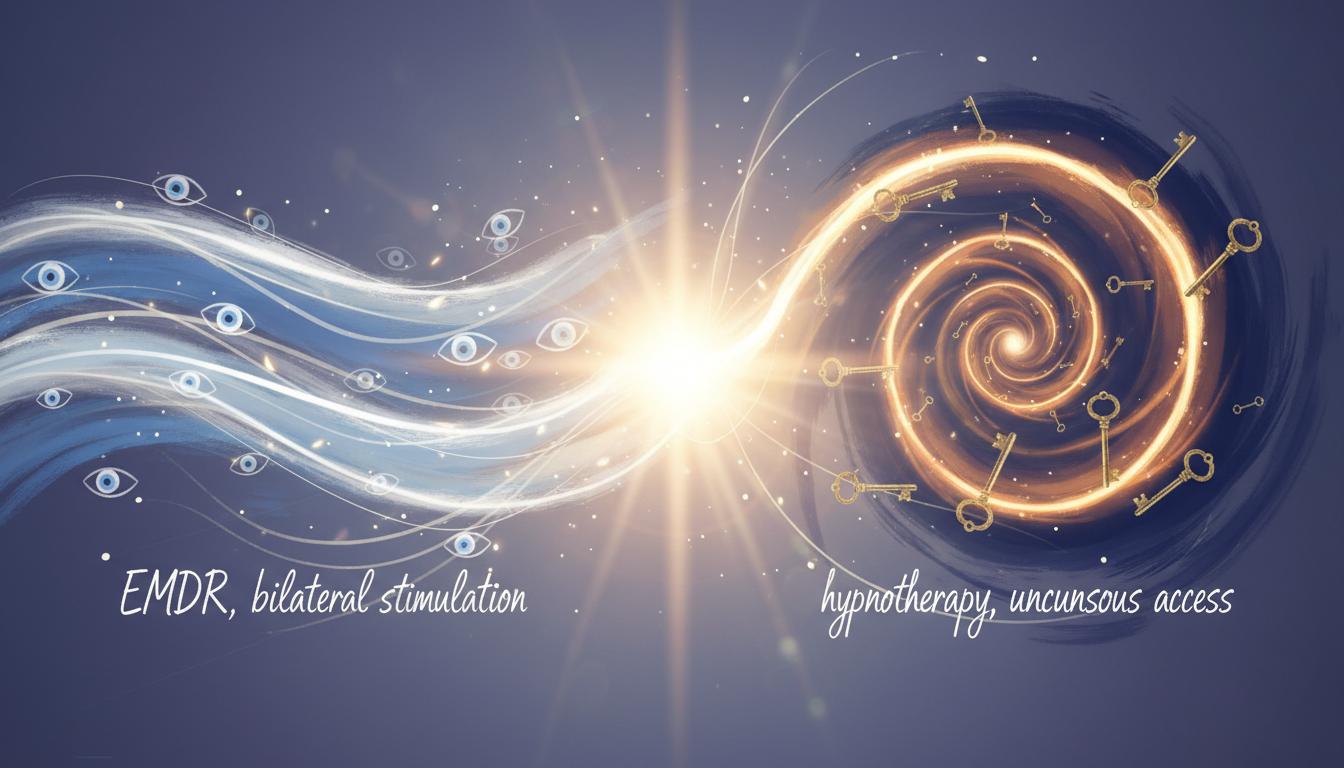
EMDR vs Hypnotherapy for Trauma: Key Differences and Which Is Right for You
EMDR (Eye Movement Desensitization and Reprocessing) and hypnotherapy are two of the most effective trauma treatments available. While they share some similarities, they work through different mechanisms and may be suited to different types of trauma.
How EMDR Works
EMDR involves recalling a traumatic memory while engaging in bilateral stimulation, typically eye movements, taps, or tones. This dual-attention process allows the brain to reprocess the traumatic memory, reducing its emotional charge and integrating it into normal memory networks. EMDR is structured around eight phases and is one of the most researched trauma treatments, with strong evidence for PTSD.
How Hypnotherapy Works for Trauma
Hypnotherapy accesses the unconscious mind directly, allowing the client to work with traumatic material without consciously reliving it. This is particularly valuable for clients who find direct exposure overwhelming. Hypnotherapy uses the therapeutic trance state to reframe traumatic memories, install resources, and heal the nervous system’s stress response. It can also address the somatic (body-based) components of trauma that talk therapy often misses.
Key Differences
EMDR requires conscious engagement with the traumatic memory during processing, which some clients find too intense. Hypnotherapy allows trauma work to occur without full conscious recall, making it gentler for highly sensitive clients or those with complex trauma. EMDR follows a specific protocol with eight distinct phases. Hypnotherapy is more flexible and can be tailored moment-to-moment based on the client’s state. EMDR has more large-scale clinical trials supporting it for single-incident PTSD. Hypnotherapy has strong evidence for complex trauma, developmental trauma, and the somatic symptoms of PTSD.
Which One Should You Choose?
For single-incident PTSD (such as a car accident or assault), both EMDR and hypnotherapy are highly effective. For complex trauma (repeated, developmental, or childhood trauma), hypnotherapy may be gentler and more effective because it does not require repeated conscious exposure. For clients who want a structured, protocol-driven approach, EMDR is excellent. For clients who want a flexible, deeply personalized approach that includes somatic and unconscious healing, hypnotherapy is ideal.
Can They Be Combined?
Yes. Many trauma therapists integrate both modalities. Hypnotherapy can prepare a client for EMDR by building resources and stabilization. EMDR can process specific traumatic memories, and hypnotherapy can then integrate the changes and heal remaining somatic patterns.
Finding the Right Fit
The most important factor is finding a skilled practitioner you trust. Both EMDR and hypnotherapy are powerful tools, but their effectiveness depends on the therapeutic relationship and the practitioner’s skill. Contact Hypno Coach Youssef to discuss which approach may be right for your trauma healing journey.