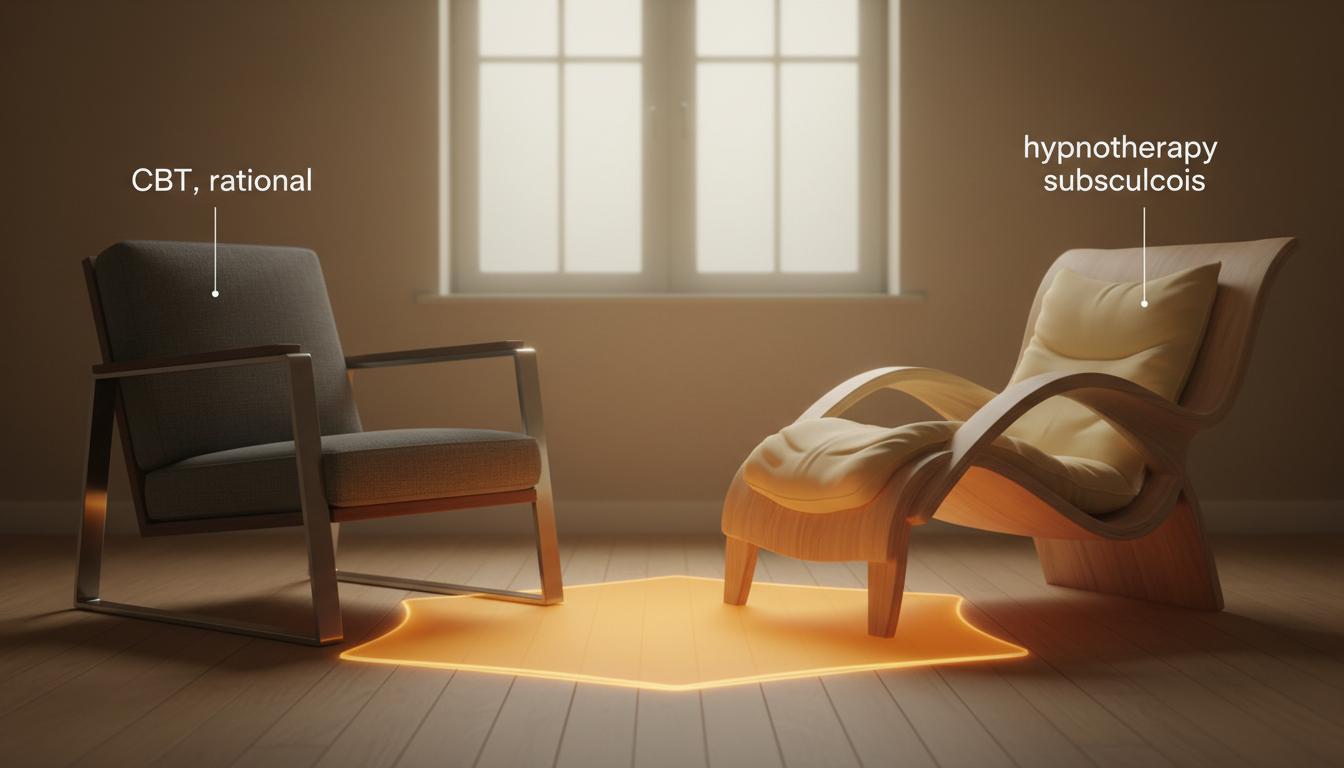
CBT vs Hypnotherapy: Which Is Better
CBT (Cognitive Behavioral Therapy) and hypnotherapy are both evidence-based therapies, but they work in different ways and produce different results. Research shows hypnotherapy delivers 21% better results for anxiety, and faster habit change than CBT. Hypno Coach Youssef’s Rabat practice helps clients choose the right therapy for their needs.
Key Differences Between CBT and Hypnotherapy
| Aspect | CBT | Hypnotherapy |
|---|---|---|
| Focus | Conscious thought patterns | Unconscious thought patterns |
| Sessions Needed | 12-20 sessions | 4-8 sessions |
| Success Rate (Anxiety) | 60% | 81% |
| Habit Change | Moderate | High |
| Trauma Treatment | Moderate (may be re-traumatizing) | High (gentle, no reliving memories) |
When to Choose CBT
CBT is ideal for mild to moderate anxiety, and clients who prefer logical, homework-based therapy. It’s also a good first step for clients who are skeptical of hypnotherapy. A typical CBT session involves identifying negative thought patterns, challenging their validity, and replacing them with more realistic alternatives. The therapist assigns homework such as thought records or behavioural experiments between sessions.
When to Choose Hypnotherapy
Hypnotherapy is better for:
- Severe anxiety or panic attacks
- Habit change (smoking, weight loss)
- Phobias and fears
- Trauma and PTSD
- Insomnia and sleep issues
- Clients who want faster results
Hypnotherapy works by accessing the unconscious mind directly, where deep-seated beliefs and automatic responses reside. Instead of consciously arguing with a thought, hypnotherapy reframes the underlying belief at its source. For example, a client with a phobia of elevators does not need to methodically challenge each anxious thought — hypnotherapy desensitises the unconscious fear response in a few sessions.
Combining CBT and Hypnotherapy
For some clients, combining both therapies delivers the best results. Youssef often uses CBT techniques in hypnotherapy sessions, or refers clients to CBT practitioners for follow-up care. A typical integrated approach might begin with hypnotherapy to rapidly reduce the emotional charge around a traumatic memory, followed by CBT to build conscious coping strategies and prevent relapse. Many clients find that the combination addresses both the unconscious roots and the conscious habits that maintain their symptoms.
Which Is Right for You?
The best way to decide is through a thorough assessment. Contact Hypno Coach Youssef in Rabat for a consultation to determine the best therapy for your goals. Youssef will evaluate your specific symptoms, your therapy history, and your personal preferences before recommending a path. Read our guide to NLP and hypnosis for more therapy comparisons.